
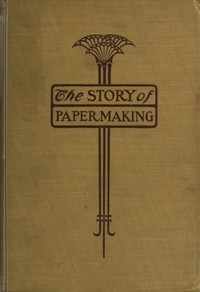
The story of paper-making : an account of paper-making from its earliest known…
Frank Osgood Butler's The Story of Paper-Making is a quiet surprise. It takes a subject that seems, on the surface, about as exciting as watching paint dry, and reveals it as a cornerstone of human progress. This isn't a technical manual; it's a biography of an idea.
The Story
Butler starts at the very beginning, in ancient China, where paper was first coaxed from mulberry bark and old fishing nets. He then maps its slow, secret journey west along the Silk Road. The book shows how paper was a revolutionary technology that faced its own hurdles—it had to compete with established materials like parchment and papyrus, and its recipes were closely guarded. The story really picks up when papermaking reaches Europe. Butler explains how the demand for books, driven by the rise of universities and later the printing press, turned paper from a curiosity into a necessity. He walks us through the old mills, the vats of pulped linen, and the painstaking work of the early papermakers. The plot, in essence, is the struggle to make knowledge portable and affordable, one sheet at a time.
Why You Should Read It
I loved this book because it connects dots you never knew were there. Butler makes you see the link between a 13th-century Italian paper mill and the newspaper you read this morning. He has a knack for highlighting the human moments—the accidental discovery, the smuggled secret, the artisan's pride. Reading it, you start to appreciate paper not as a blank commodity, but as a triumph. Every page in this book is, ironically, a testament to the very material it celebrates. It gives you a deep appreciation for the physical objects that carry our history and our stories.
Final Verdict
This book is perfect for curious minds who enjoy history told through everyday objects. If you liked Mark Kurlansky's Salt or Simon Garfield's Just My Type, you'll feel right at home here. It's also a great pick for makers, artists, or anyone who works with their hands and appreciates the heritage of craft. While it was written in the early 20th century, its clarity and sense of wonder feel timeless. Just be prepared—you'll never toss a piece of paper into the recycling bin without a moment of respect again.
This text is dedicated to the public domain. Feel free to use it for personal or commercial purposes.
Ashley Walker
2 months agoHaving read this twice, the flow of the text seems very fluid. A valuable addition to my collection.




Kevin Flores
10 months agoI had low expectations initially, however the content flows smoothly from one chapter to the next. I will read more from this author.